Officials stress that no one is being silenced, and that hosts who comply promptly are free not to be silenced in the future.
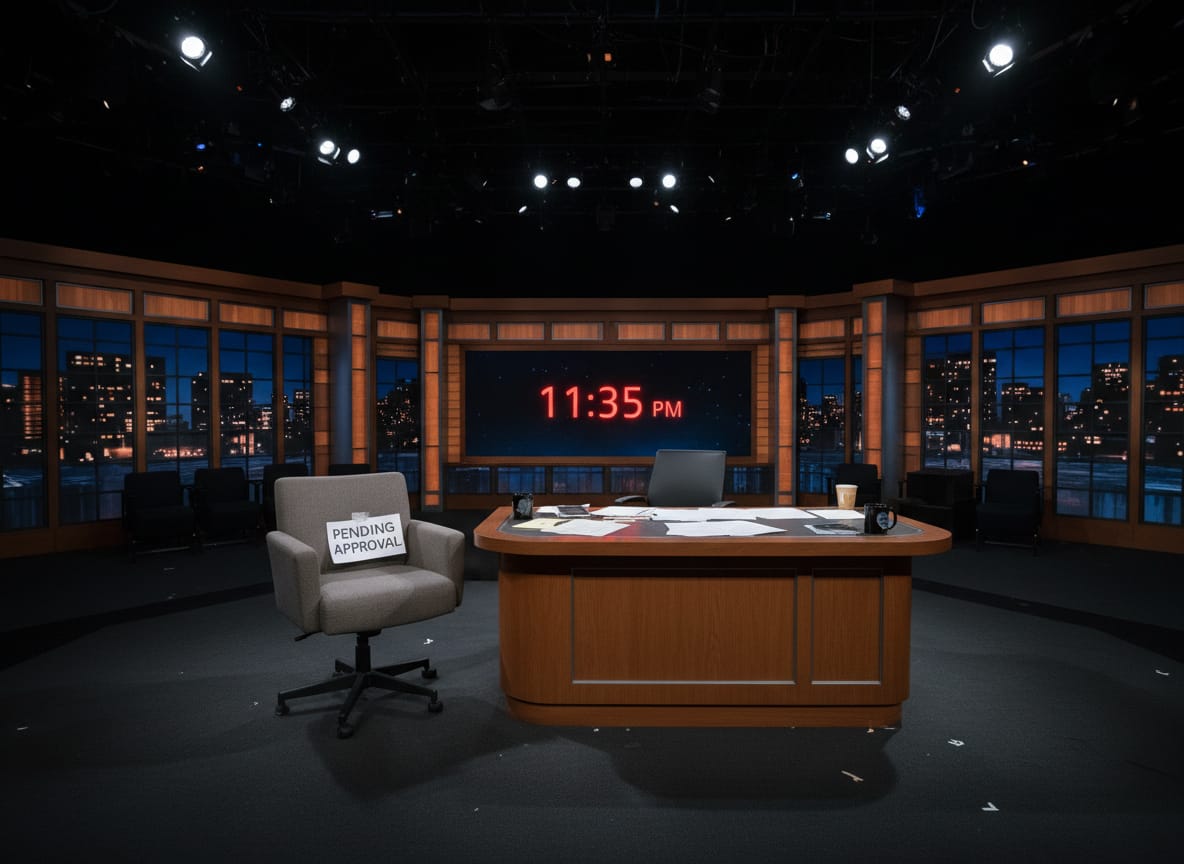
The Federal Communications Commission’s new guidance on FCC equal time late night programming claimed its first late-night casualty this week, after CBS barred Stephen Colbert from airing an interview with a Democratic Senate candidate who was already seated in the studio.
CBS insisted it had “not prohibited” the interview but had instead “provided legal guidance” that broadcasting it could trigger equal-time obligations. The network then presented the show with “options for how the equal time for other candidates could be fulfilled,” though it did not specify what those options were or whether any of them involved airing the interview.
“There’s a meaningful difference between telling someone they can’t do something and telling them all the reasons they shouldn’t do it,” a network source explained.
FCC Equal Time Rules Expand to Late Night
The guidance, issued in January by FCC Chairman Brendan Carr, warned that late-night talk shows carried on broadcast networks were required to offer equal airtime to all candidates competing for the same office. For years, networks had operated under a “bona fide news” exemption that the FCC itself had reinforced in 2006. Carr clarified that this was no longer the case, citing what he described as “purely partisan political purposes.”
Under the updated interpretation, Colbert’s interview with Texas State Representative James Talarico—who is running in the state’s Democratic Senate primary—would have required CBS to offer equivalent time to every other candidate in the race, plus the Republican incumbent, plus anyone else who might conceivably run.
“If you interview one candidate, you interview all of them,” an FCC official said. “If you can’t interview all of them, you interview none of them. Free speech has never been easier to understand.”
A Pattern of Compliance
The incident follows a pattern of networks adjusting their programming in response to regulatory pressure. Last year, ABC pulled “Jimmy Kimmel Live!” for nearly a week after Carr suggested the administration could punish the network over a monologue. This month, the FCC opened a probe into “The View” over an interview with the same candidate.
Colbert, who devoted six minutes of Monday’s broadcast to criticizing the decision, made it clear the change was not voluntary.
“Let’s just call this what it is,” Colbert said on the broadcast, before calling Carr a “smug bowling pin.” CBS’s parent company, Paramount, is currently competing with Netflix to acquire Warner Bros. Discovery in a deal that would require federal approval.
Colbert posted the banned interview to YouTube instead, where it received 1.7 million views—roughly eighteen times the views of his other guest segment that evening, which aired without incident because Jennifer Garner is not currently running for office.
The FCC’s lone Democratic commissioner, Anna Gomez, called the situation “another troubling example of corporate capitulation,” though analysts noted that corporate capitulation has historically tested well in focus groups conducted by the corporations doing the capitulating.
Colbert’s show is scheduled to end in May. CBS has said the cancellation was “purely a financial decision,” a characterization that officials on both sides found entirely credible for different reasons.
Developing.
About the Author


