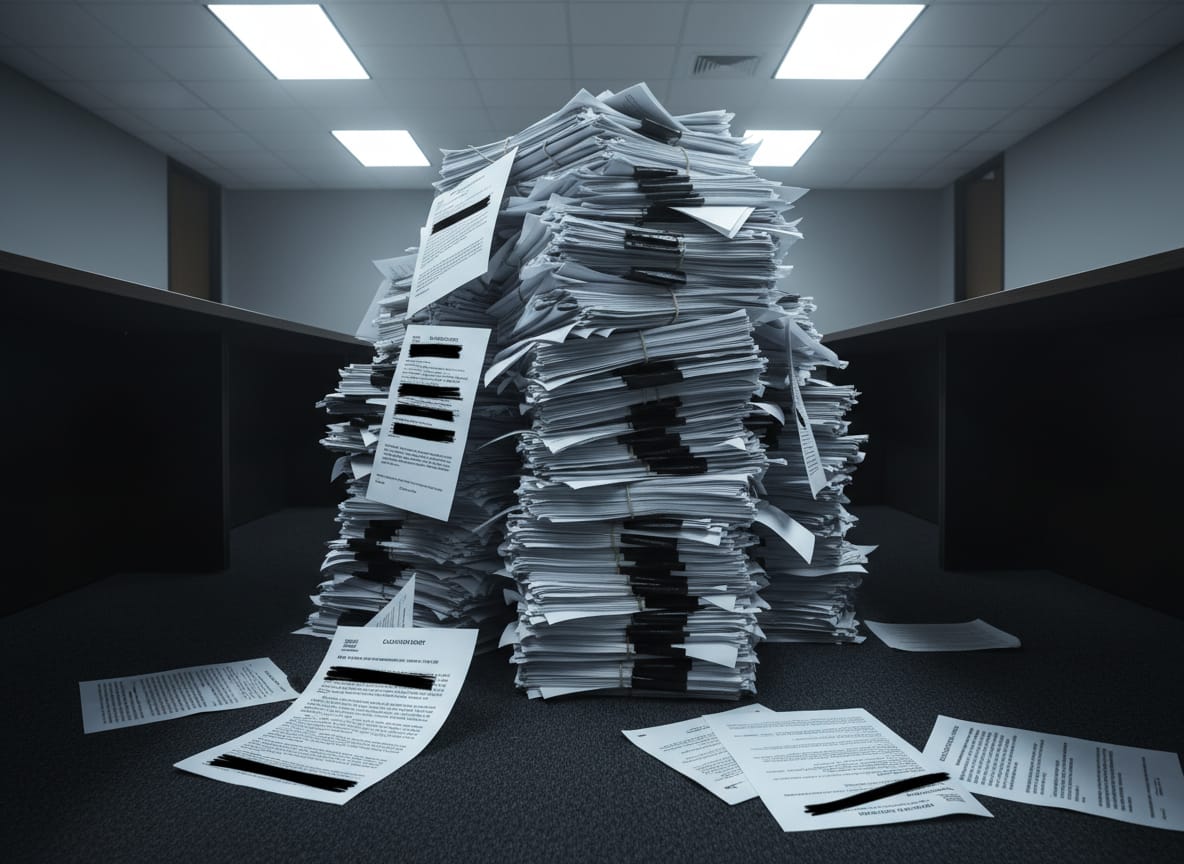
Attorneys say thousands of redaction errors exposed victims the DOJ promised to protect, including the only Epstein witness designated ‘Protect Source’ in the entire case file
The Justice Department’s release of more than three million pages of Jeffrey Epstein files has produced what victims’ attorneys are calling the worst mass violation of victim privacy in U.S. history, exposing the names of at least 43 survivors, publishing dozens of nude photographs of young women, and—in one case reported Monday—initially revealing the identity of the only victim in the Epstein case file index marked “Protect Source.”
That woman, according to investigative reporting and internal FBI documents published in the Epstein database, told the FBI that Donald Trump sexually assaulted her as a child. An internal Bureau email from July 2025 lists Trump first among “positive case hits” of prominent names in the files, with a note that the accuser “ultimately refused to cooperate.” No other name on the list carries any annotation.
A Victim-Oriented Approach
The DOJ had assured a federal court in the Southern District of New York that its review process prioritized survivor protection. In a December letter to Judge Paul Engelmayer, prosecutors detailed more than 30 meetings with victims’ counsel, a continuously updated “Victim Privacy File,” and what they called a “rigorous” redaction effort involving over 500 attorneys and reviewers.
A Wall Street Journal review found that 43 survivors’ full names appeared unredacted in the January 30 release, with some names visible more than 100 times. More than two dozen were minors when they were abused. Home addresses turned up in keyword searches. Attorneys Brad Edwards and Brittany Henderson, who had provided the department with a list of 350 victim names on December 4 specifically to prevent this outcome, said the DOJ failed to perform a basic keyword search.
The New York Times separately discovered dozens of unredacted nude photographs of young women—some apparently teenagers—with their faces fully visible. The images appeared to come from Epstein’s personal collection and included beach and bedroom settings. The department began removing them after the Times notified officials.
Mistakes Were Made, Officials Confirm
Deputy Attorney General Todd Blanche characterized the Epstein redaction failures as affecting “.001% of all the materials” and encouraged victims to report errors via email. The department subsequently pulled several thousand documents from its website, attributing the exposure to “technical or human error.”
Eight victims submitted statements to Judge Richard Berman. One described the release as “life threatening.” Another reported receiving death threats after 51 entries exposed her private banking information.
Separately, the DOJ chose to release files related to the Trump accuser from the Ghislaine Maxwell discovery production—which is governed by a protective order—rather than from the FBI’s original case files, which the department itself told the court are not subject to that order and carry no additional procedural hurdles. Of four FBI interviews with the accuser that prosecutors gave Maxwell’s defense team, only one has been released.
Asked about releasing the remaining materials at a January 30 press conference, Blanche was direct. “I think there’s a hunger or a thirst for information that I do not think will be satisfied by the review of these documents,” he said. “There’s nothing I can do about that.”
About the Author


