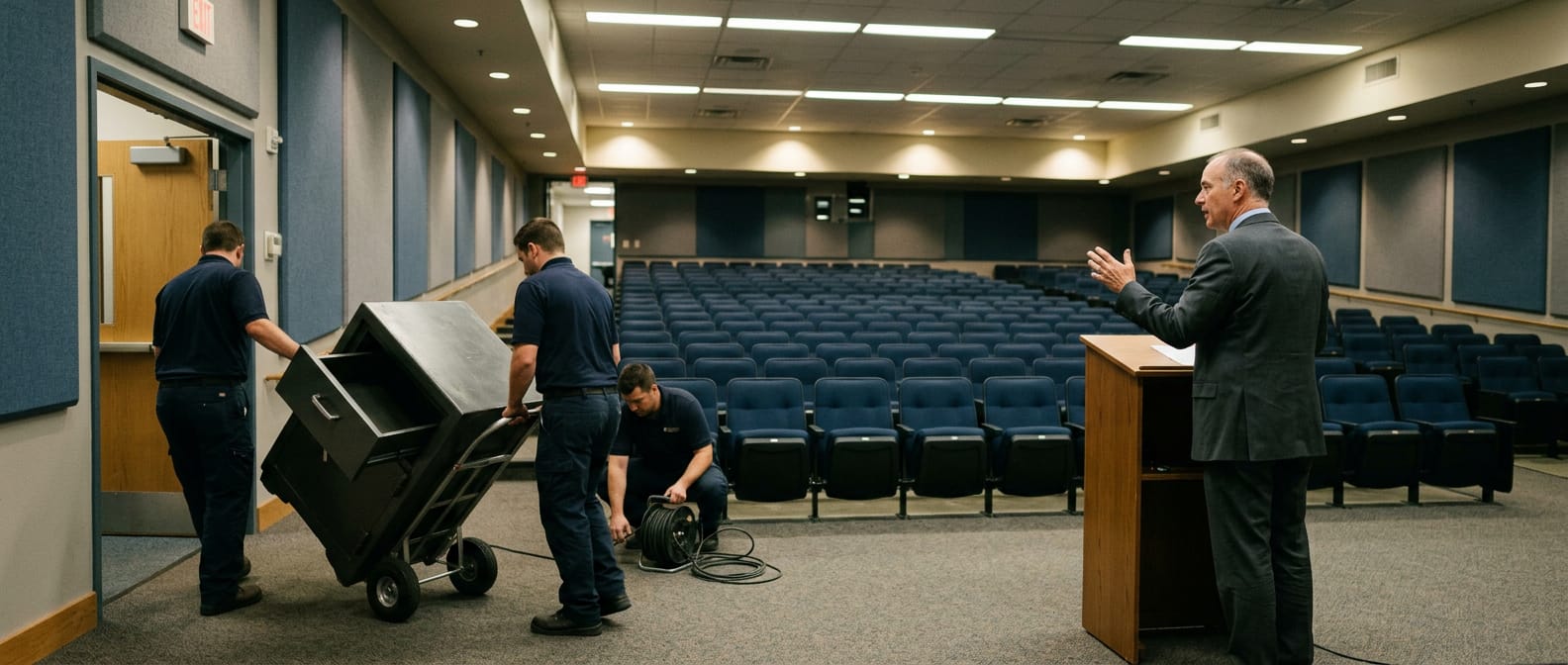
An Army official said brigades carrying the newest equipment have fared better in these rotations. The unit sent to Hohenfels was an armored brigade out of Fort Hood.
HOHENFELS, GERMANY—Citing the training value of realistic conditions, defense officials confirmed that Ukrainian drone operators eliminated a U.S. armored brigade during the Combined Resolve exercise held here in April and May, killing vehicles fast enough that staff had to return the destroyed units to the scenario as new ones so the maneuvers could continue.
About 3,500 American personnel took part, drawn mainly from the 3rd Armored Brigade Combat Team, 1st Cavalry Division. The assignment was to attack a position held by the training ground’s opposition force, reinforced by Ukrainian troops of the 412th Regiment of Unmanned Systems Forces, known as Nemesis. Alistair MacDonald, Lara Seligman and Daniel Michaels of The Wall Street Journal reported the result Wednesday. The rotating force carried standard electronic warfare and counterdrone gear.
Reconnaissance drones located the American vehicles by the dust they raised. Drones dropping explosives came next, then first-person-view drones, which fly into what they hit. Live ammunition is rare at these events. A drone hovers over a vehicle or closes to a set distance, an observer awards the kill, and the vehicle is out of the fight. The Journal reported that the Ukrainians worked quickly enough that dead American units had to be “re-spawned.”
What the Combined Resolve Exercise Was Built to Do
Combined Resolve runs twice a year at the Joint Multinational Readiness Center and centers on large-scale ground combat, with armored formations supported by infantry, helicopters and drones. Army leaders in Europe have spent recent years pulling Ukrainian soldiers into the rotations to pass on what four years of war taught them. Losing is the intended product.
“A brigade that gets destroyed twice has been to school twice,” said a defense official who was not authorized to discuss the results of the rotation. “People keep asking how many times we won. That is not the number this exercise produces.”
Performance did improve across the two weeks. The rotating force grew better at dispersing, concealing itself and using electronic warfare, according to an Army official. Halfway through, the Ukrainians switched sides and showed the Americans how to run drones offensively, which the official said they did well.
Ten Ukrainians, Two NATO Battalions, Half a Day
Germany is the third such result to reach the public. At Hedgehog 2025 in Estonia last May, an exercise of more than 16,000 troops from 12 NATO countries, about ten Ukrainian operators playing the adversary mock-destroyed 17 armored vehicles and ran roughly 30 further strikes in half a day, eliminating two battalions. The Journal reported that a U.S. contingent was among the forces beaten there. Swedish forces led an exercise this spring in which Ukrainian drone teams outperformed the participants as well.
Ukrainian crews have spent nearly four and a half years fighting Russia, and they repair and adapt drones under fire. American operators have not had that practice. Valeriy Zaluzhniy, the former Ukrainian commander in chief, argues that drone technology has made maneuver warfare unworkable for now, which is his explanation for the frozen front in the east.
Some U.S. officers hold that drones look decisive in Ukraine only because that war has stalled, and that armor recovers its value once movement returns. The Combined Resolve exercise tested whether armor can move.
The Budget That Answers It
The Pentagon has asked Congress for nearly $75 billion in fiscal 2027 for drones and counterdrone technology, inside a $1.5 trillion request that runs about 42 percent above the current year. Jules Hurst, performing the duties of comptroller, told reporters in April that the plan is “the largest investment in drone warfare and counter-drone technology in U.S. history.” For fiscal 2026 the department sought $13.4 billion for autonomous systems and $3.1 billion for counterdrone work.
Most of that increase lands in one office. The Defense Autonomous Warfare Group, which sits under Special Operations Command and obligated $225.9 million in fiscal 2026, would receive $54.6 billion, the largest year-over-year rise for any program or office in the request. Federal buying has moved quickly elsewhere too. Newswax reported this week on a Homeland Security contract for shock gloves, worth up to $20 million, that is expected to be awarded without competition.
The same request carries $1 billion in advance procurement for the first Trump-class battleship, a 35,000-ton nuclear guided-missile ship the president announced at Mar-a-Lago in December and agreed to name after himself. The Congressional Budget Office put the 15-ship program at $275 billion last week. It would be the largest surface combatant the Navy has built since the Second World War.
Where the Combined Resolve Exercise Leaves the Armor
The vulnerability is not confined to training grounds. Iranian long-range drones have killed and wounded American soldiers and destroyed aircraft in the Middle East this year.
Washington has been buying and studying in response. The United States is testing Ukrainian drones for purchase and has used counterdrone systems proven in that war to protect its forces in Iran. Testifying to senators in May, Defense Secretary Pete Hegseth said he had “personally approved additional personnel there to learn from that drone battlefield.”
Combined Resolve is scheduled twice a year, and the spring rotation closed in May. No vehicle at Hohenfels was actually destroyed. The brigade drove them home.
Developing.
About the Author